The ELABEST X100 Ergonomic Mesh Office Chair review is for people looking to combine adjustable desk support with a footrest for breaks between focused work sessions. Its many adjustment points make fit and setup especially important considerations.
ELABEST X100 Chair Review Summary
The quick verdict
1,000+ ratings
Read Amazon ReviewsELABEST X100 Ergonomic Mesh Office Chair
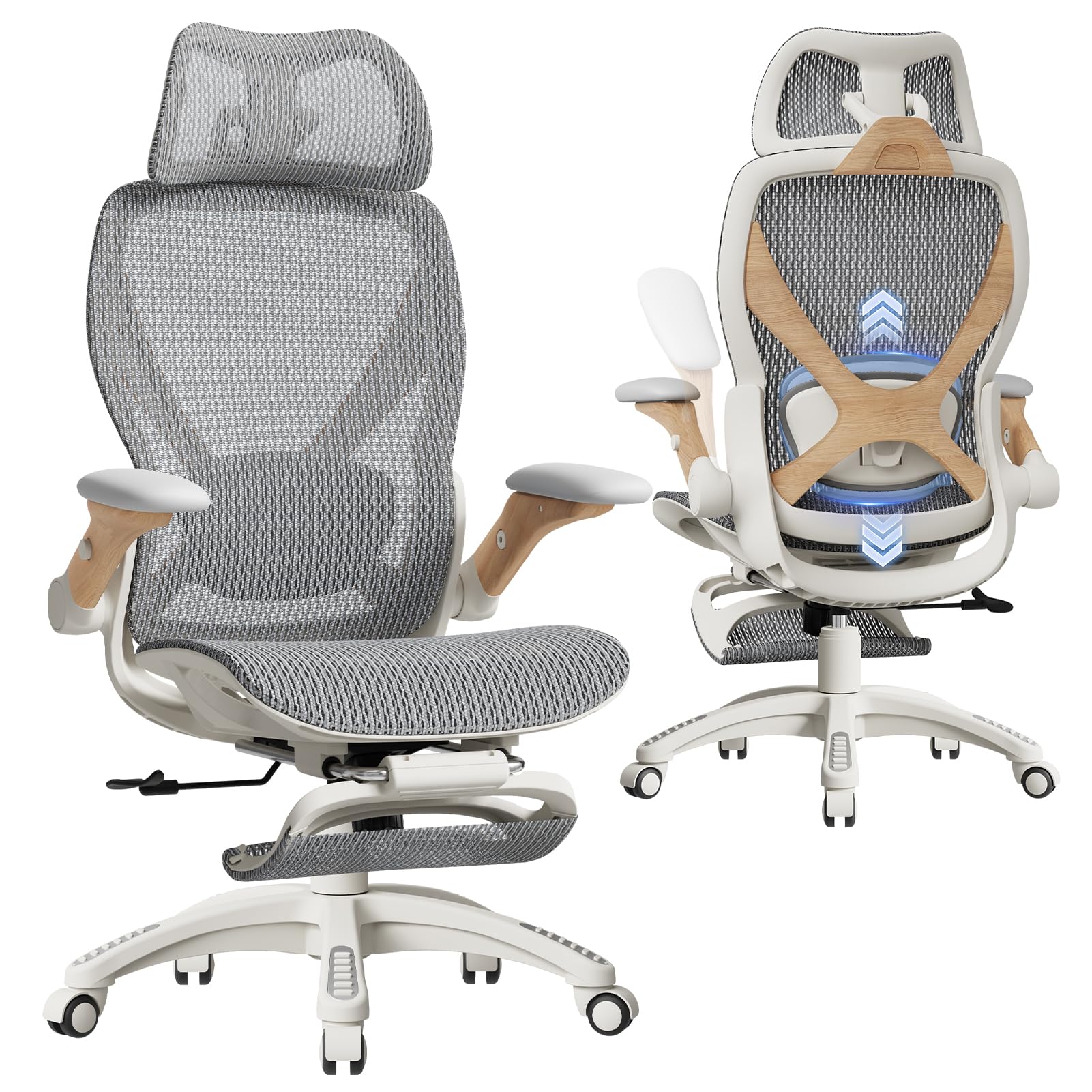
A feature-rich fit for desk workers who want adjustable lumbar and head support, flip-up arms, and a built-in footrest for reclining breaks.
- Dynamic lumbar support adjusts 1.6 inches in depth, 2 inches in height, and 15 degrees in rotation, with a spring-loaded tracking design.
- Five-way flip-up armrests adjust for height, width, forward and backward position, and rotation.
- The 3D headrest measures 28 cm and adjusts to support different head and neck positions.
- The three-stage reclining mechanism works with an 18-inch extendable footrest that has two angle positions.

Pros
- Several lumbar adjustment directions make it easier to tailor the support position.
- Flip-up, five-way armrests offer flexibility around a desk and when changing posture.
Consider before buying
- The chair’s extensive adjustments may require patience to set up and fine-tune.
- A built-in footrest and reclining mechanism add features that may go unused by buyers who want a straightforward upright task chair.
Read the full review summary
The X100 brings together a spring-loaded lumbar support system, a 3D headrest, five-way flip-up armrests, and a two-position footrest that extends from beneath the seat.
Its mesh construction and reclining mechanism are intended to support a range of working and resting positions, while the 18.3–23-inch seat-height range gives buyers a concrete measurement to compare with their desk and body.
This design may suit someone who spends long stretches at a home desk and wants arm, head, and lower-back adjustments plus a place to put their feet while reclining.
The tradeoff is complexity: buyers should be ready to spend time adjusting the chair and confirm that its dimensions and support positions suit their frame and workspace.
The buying factors
ELABEST X100 Chair Scorecard
Editorial scores reflect listed features and buyer fit; they are not laboratory measurements or customer ratings.
Lumbar adjustability
The spring-loaded support adjusts in depth, height, and rotation, giving buyers several ways to tune lower-back contact.
Armrest flexibility
The five-way arms adjust in multiple directions and flip up, which can help adapt to different desk positions.
Head and neck support
The 3D headrest offers adjustment in three dimensions and is designed around a cervical curve.
Reclining and footrest
A three-stage reclining mechanism pairs with an extendable, two-position footrest for seated work and reclined breaks.
Breathable construction
The chair uses ventilated mesh, a sensible choice for buyers who prefer airflow over an upholstered back.
Setup and ownership
The product includes a five-year warranty and is described as tool-free to assemble, though its many adjustments may take time to dial in.
Key Features and Specifications of ELABEST X100 Chair
- Dynamic lumbar support adjusts 1.6 inches in depth, 2 inches in height, and 15 degrees in rotation, with a spring-loaded tracking design.
- Five-way flip-up armrests adjust for height, width, forward and backward position, and rotation.
- The 3D headrest measures 28 cm and adjusts to support different head and neck positions.
- The three-stage reclining mechanism works with an 18-inch extendable footrest that has two angle positions.
- Dual-Stripe AirMesh is used for ventilation and elasticity.
- Seat height ranges from 18.3 to 23 inches; the chair is specified for a maximum load of 300 pounds.
- The chair is described as BIFMA certified and includes a five-year warranty.
Pros and Cons of ELABEST X100 Chair
Pros
- Several lumbar adjustment directions make it easier to tailor the support position.
- Flip-up, five-way armrests offer flexibility around a desk and when changing posture.
- The integrated footrest and staged recline accommodate breaks without requiring a separate footstool.
- Mesh construction prioritizes airflow across the chair.
- The stated seat-height range and 300-pound capacity help buyers check basic fit before purchase.
Consider before buying
- The chair’s extensive adjustments may require patience to set up and fine-tune.
- A built-in footrest and reclining mechanism add features that may go unused by buyers who want a straightforward upright task chair.
- The 18.3-inch minimum seat height may not suit every desk or leg length; compare it with your own seated fit.
Who Should Buy ELABEST X100 Chair?
Good fit
Consider the X100 if you want one chair to cover focused desk work and reclined breaks.
Its coordinated package of adjustable lumbar support, headrest, flip-up arms, and extendable footrest is most relevant to people who will actively use several of those features.
Before choosing it, measure your desk and compare the 18.3–23-inch seat-height range with the height that lets your feet rest comfortably.
Also consider whether the armrests, headrest, and lumbar support can align with your posture; adjustability only helps when the parts fit your body.
The 300-pound capacity and five-year warranty are useful decision points for buyers comparing chairs.
Check the warranty terms and assembly instructions at purchase, and leave time to tune the multiple adjustments rather than expecting a one-setting setup to suit every task.
Who should skip it
Skip this design if you want a minimal chair for upright work and have no use for a footrest or reclining positions. Its feature set is centered on adjustability and posture changes.
Look elsewhere if the minimum seat height or armrest placement does not work with your desk and body. Verify those fit details before committing, especially if you need a particular seated position.
How the ELABEST X100 Chair fits a workday
Support that can be tuned
The lumbar unit combines depth, height, and rotation adjustments with a spring-loaded tracking design.
That gives buyers more control over where lower-back contact lands than a fixed pad would, but the result depends on positioning it to match the curve of the user’s back.
Arms and headrest for changing tasks
The five-way armrests can be moved to suit desk work and flipped up when a different arm position is preferable.
The 3D headrest adds another contact point to adjust for neck support, so it is useful to check both components while seated at the desk rather than treating their adjustability as a substitute for proper fit.
A recline setup with a footrest
The three-stage recline and extendable footrest give the chair a break-time role beyond upright typing.
The two footrest angle positions add a small amount of choice, although buyers should check available clearance under and around their desk so the extended section can be used comfortably.
Mesh, dimensions, and ownership
The mesh construction favors ventilation, while the specified seat-height range and 300-pound capacity provide practical measurements for screening fit.
A five-year warranty is included, and the product is described as tool-free to assemble; buyers should still allow time to follow the assembly directions and adjust the chair to their workspace.
Alternatives to ELABEST X100 Chair
Home Office Desk Chairs alternative
17,000+ ratings
Read Amazon ReviewsSIHOO M18 Ergonomic Office Chair
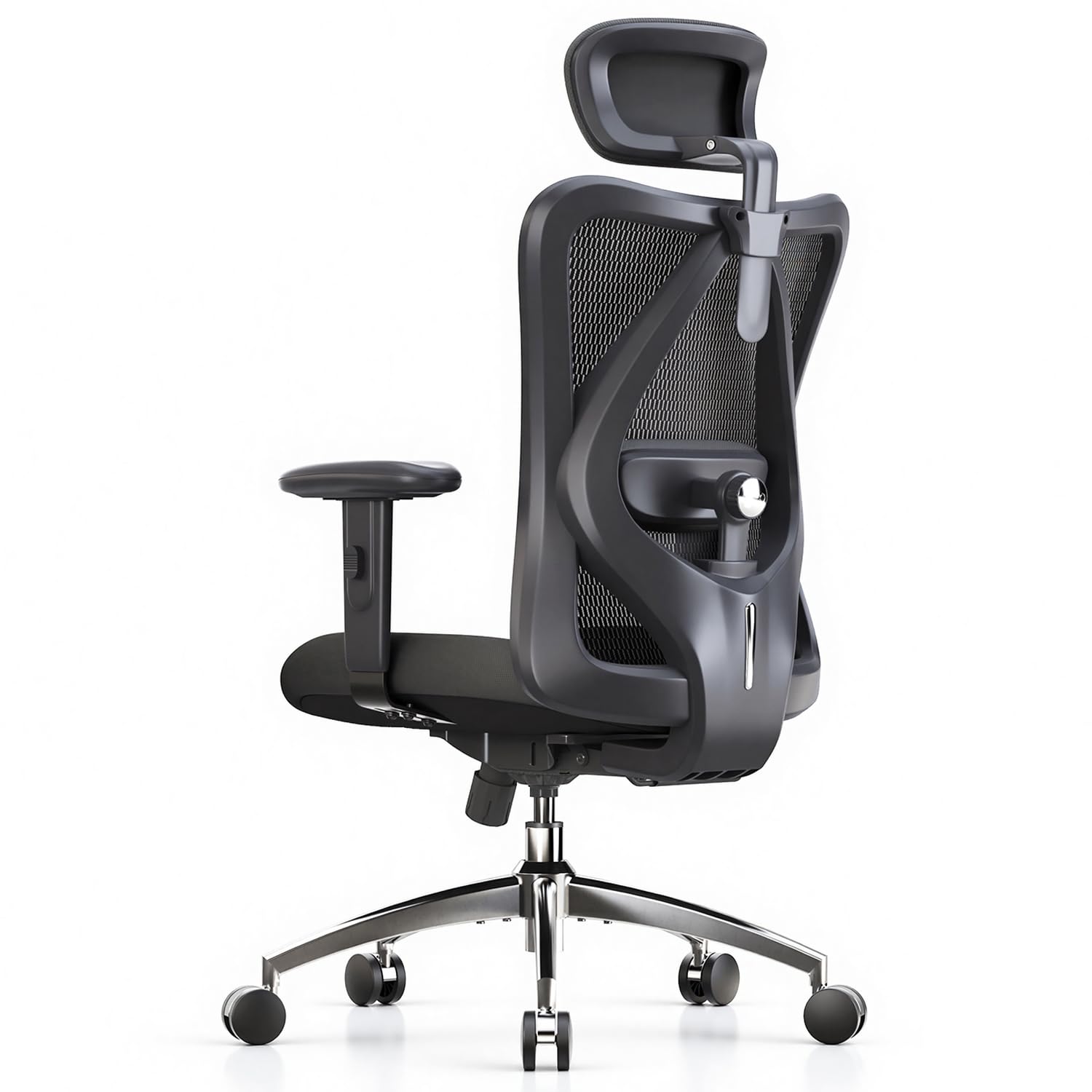
Choose the X100 if its footrest and five-way armrests are central to your routine. Consider the M18 if you prefer a more conventional mesh office chair with adjustable support and do not need the X100’s footrest setup.
- The SIHOO M18 has adjustable seat height, headrest, lumbar support, and back support, plus mesh construction and a 330-pound capacity; its description does not specify an integrated footrest.
- The ELABEST X100 pairs multi-directional lumbar and arm adjustments with a footrest and staged reclining.
Home Office Desk Chairs alternative
17,000+ ratings
Read Amazon ReviewsSIHOO B300 PRO Ergonomic Mesh Office Chair
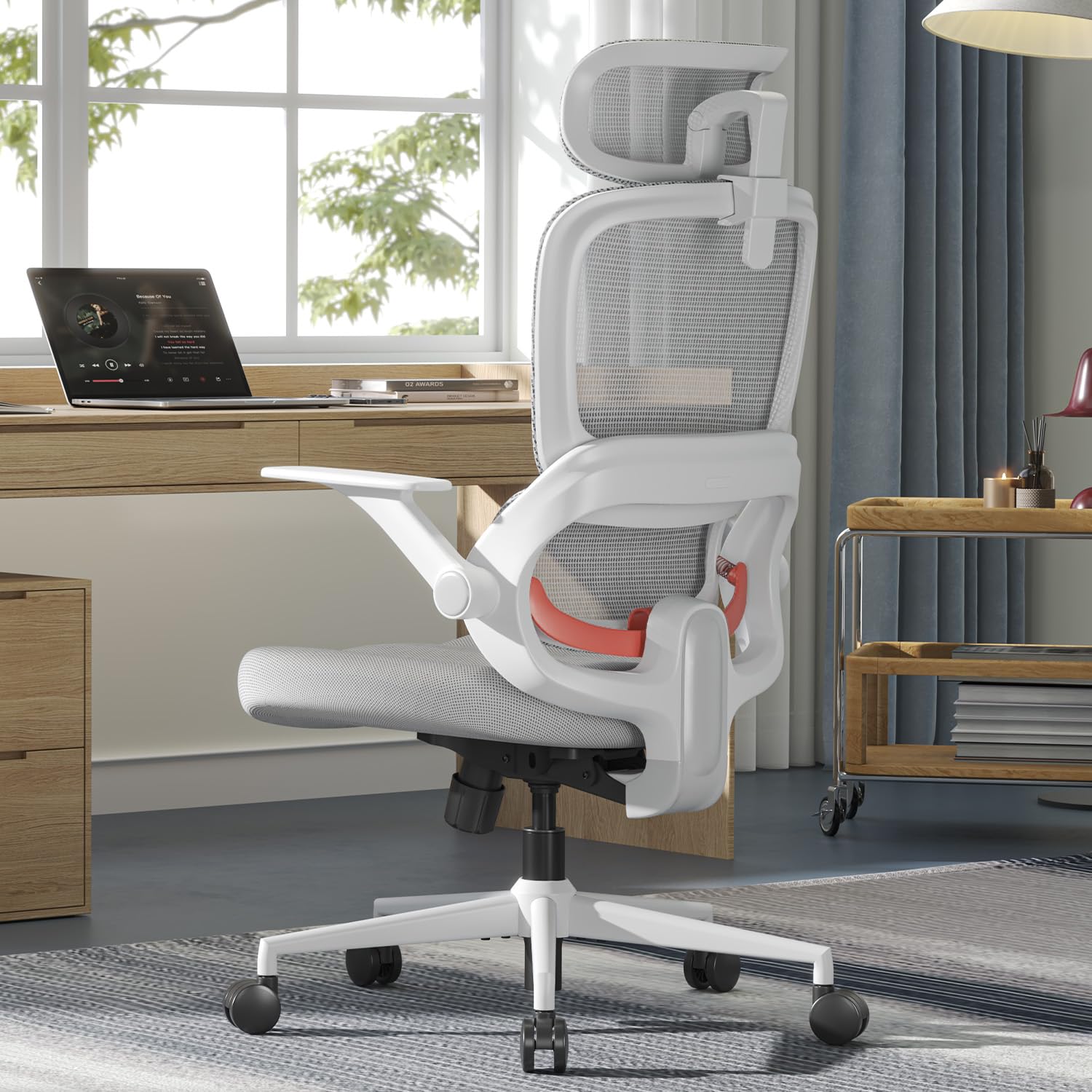
The B300 PRO may be a better fit if adjusting seat depth and backrest height matters more than having a built-in footrest.
The X100 is the clearer choice for buyers who specifically want the footrest and its two angle positions.
- The SIHOO B300 PRO offers a four-way spring-assisted lumbar system, independently adjustable backrest height, adjustable seat depth, weight-sensing recline, and six-way armrests; it is described without a footrest.
- The ELABEST X100 emphasizes a built-in footrest, staged recline, and multiple adjustments at the lumbar support and arms.
Is ELABEST X100 Chair Worth It?
The ELABEST X100 Ergonomic Mesh Office Chair is worth considering for buyers who want substantial adjustability alongside a built-in footrest for reclining breaks.
Its strongest appeal is the combination of movable lumbar support, flexible armrests, a 3D headrest, and mesh construction.
Check the seat-height range against your desk and body, and be prepared to adjust the chair to find a comfortable fit.
If you will use its recline and footrest features, the X100 offers a more complete work-and-break setup; if not, a simpler task chair may be a better match.
Your review at a glance
1,000+ ratings
Read Amazon ReviewsELABEST X100 Ergonomic Mesh Office Chair
A feature-rich fit for desk workers who want adjustable lumbar and head support, flip-up arms, and a built-in footrest for reclining breaks.
- Dynamic lumbar support adjusts 1.6 inches in depth, 2 inches in height, and 15 degrees in rotation, with a spring-loaded tracking design.
- Five-way flip-up armrests adjust for height, width, forward and backward position, and rotation.
- The 3D headrest measures 28 cm and adjusts to support different head and neck positions.
- The three-stage reclining mechanism works with an 18-inch extendable footrest that has two angle positions.